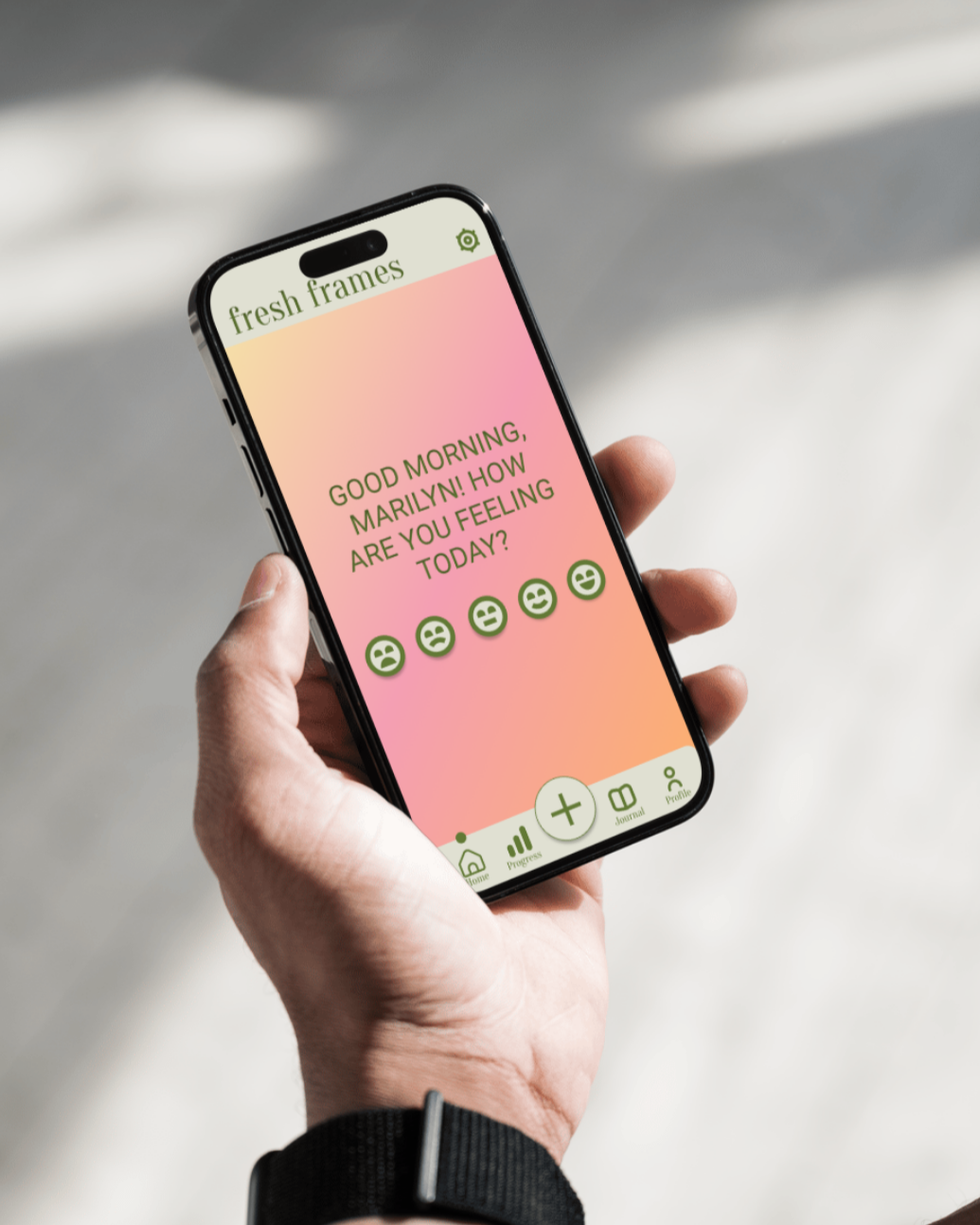
Fresh Frames
-
Fresh Frames -
Fresh Frames is an app I designed that helps users focus on what is personally meaningful to them, rather than being influenced by external social media pressures. Many people feel overwhelmed by unrealistic standards that don’t align with their own values.
Fresh Frames offers a fresh start by guiding users in identifying their goals and priorities and outlining steps to achieve them. The app features a social media–inspired interface, but all content is private and intended solely for the user. It aims to replicate the engagement and adrenaline rush of current social media platforms while redirecting that energy toward personal growth, daily productivity, and meaningful goal achievement.
Research Approach
01
Compared Data: With the data I collected, I went through and identified similarities and pain points. From here, I categorized the properties of my potential users along with what they would/wouldn’t want to get out of the app.
02
Competitive Analysis: I created a breakdown of my biggest competitors when it comes to other mental health apps and identified what makes my app different.
03
Interviews: I interviewed 5 individuals who each gave me a rundown of their current routine and actions regarding goal setting, their mental health, and their thoughts on social media.
04
Design: I created a visual representation of an app layout and a sketch of the format in Figma. The goal of this includes building a brand/aesthetic and an environment that is comfortable and brings the user back to the app.
Findings
After conducting my introduction interviews, I identified the main recurring themes about my participants’ habits. I highlighted the prominent quotes that encompassed the main pain points of my users and used them to build my user persona.
“I have a complicated relationship with social media.”
“I get this adrenaline rush from pressing ‘post,’ but I don’t even know why.”
“I really struggle to acknowledge my successes.”

Sasha McEvans
The college student struggling with comparison, procrastination, and a sense of self
Age: 21 Gender: Female Location: Oxford, OH Occupation: Student Personality: Social, Observant, Avoidant of stress, Passionate
Background: Sasha is an Economics major at Miami University and is in the Farmer School of Business. She has 8:30 am classes every week and struggles with balancing her social and academic life. She is a member of the Club Tennis Team and is also involved with Delight Ministries on Campus.
User Persona
Pain Points: Sasha struggles heavily with comparison. Being in the Farmer School of Business has caused her to analyze her own resume v.s. her peers in a very unproductive way. She rushed a business fraternity last semester and was dropped, which was very hard on her mental health. She joined the Club Tennis Team to pass the time, but still has difficulty refraining from comparing herself to her teammates. She often gets overwhelmed with these thoughts which causes her to procrastinate schoolwork, self-care, and external assignments.
Goals: Sasha wants to find herself again. She wants to become sure of her priorities and to be confident in what she wants out of her college experience. She has tried removing social media from her life, but hasn’t found a fulfilling replacement for it yet.
Design Tenets
Replicate the social media adrenaline rush
1. Create an environment where users feel accomplished by hitting “publish on their logs,” but promotes productive approach to posting
2. Emphasize that posts should be fulfilling personal goals, not society’s.
Create a calming and motivating space
1. Build an aesthetic that is less jarring than competitors such as Instagram and TikTok
2. Offer the space to be a supportive place of refuge
Emphasize progress over perfection
1. Change the narrative that in order to do something, it has to be speedy and perfect.
2. Remind users that everyone works at their own pace.
3. Remind users that the app is for their personal growth.
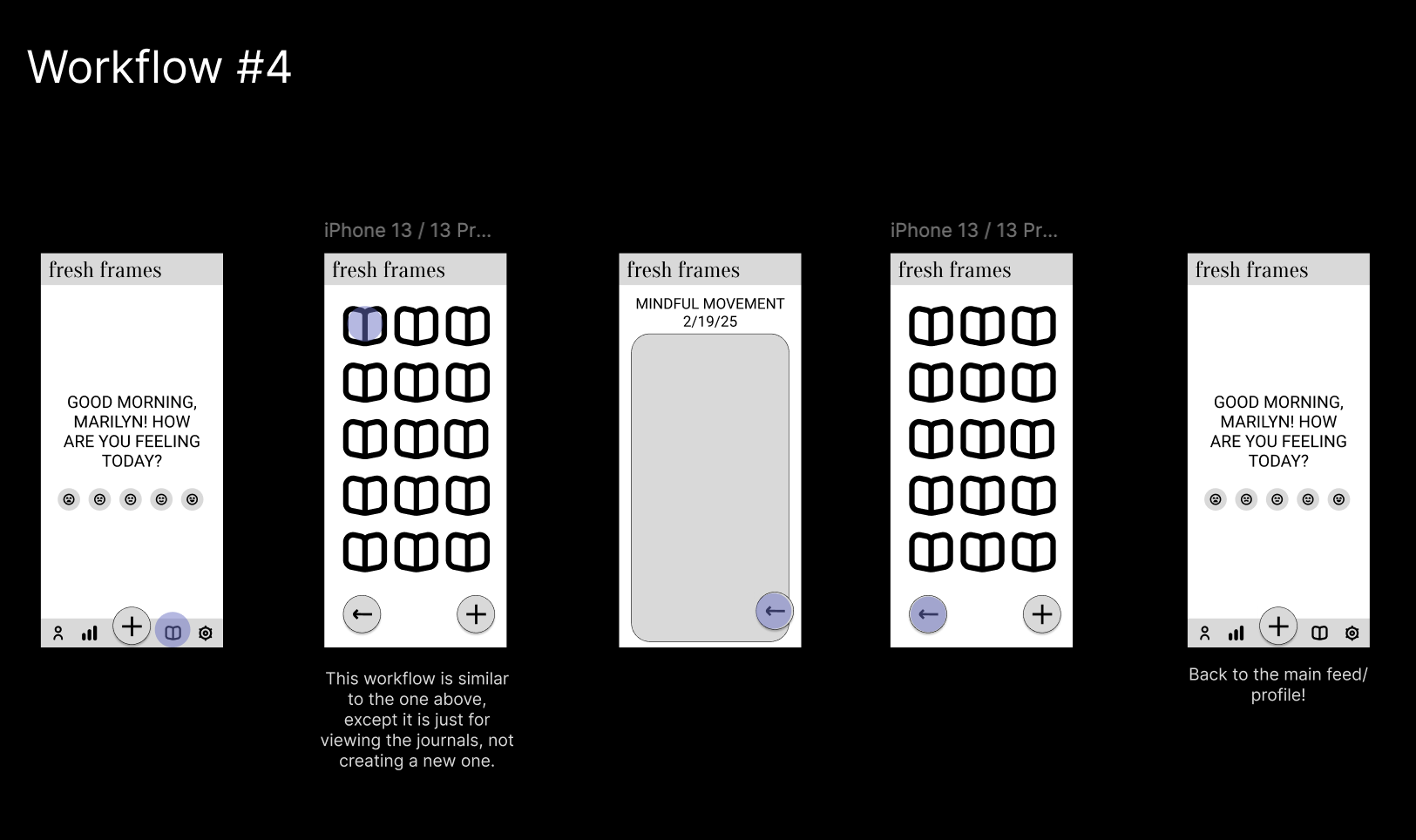
Workflow Sketches
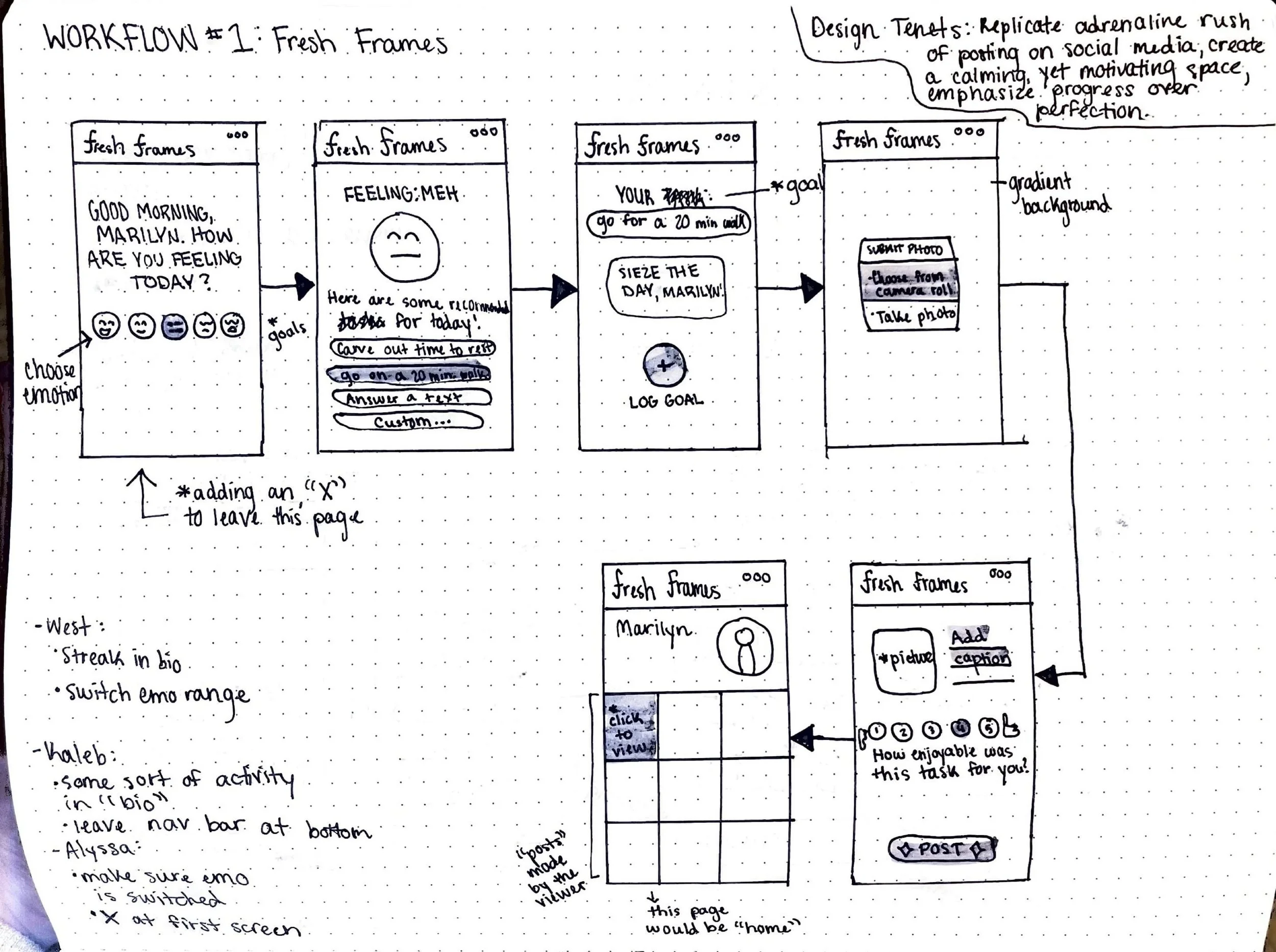
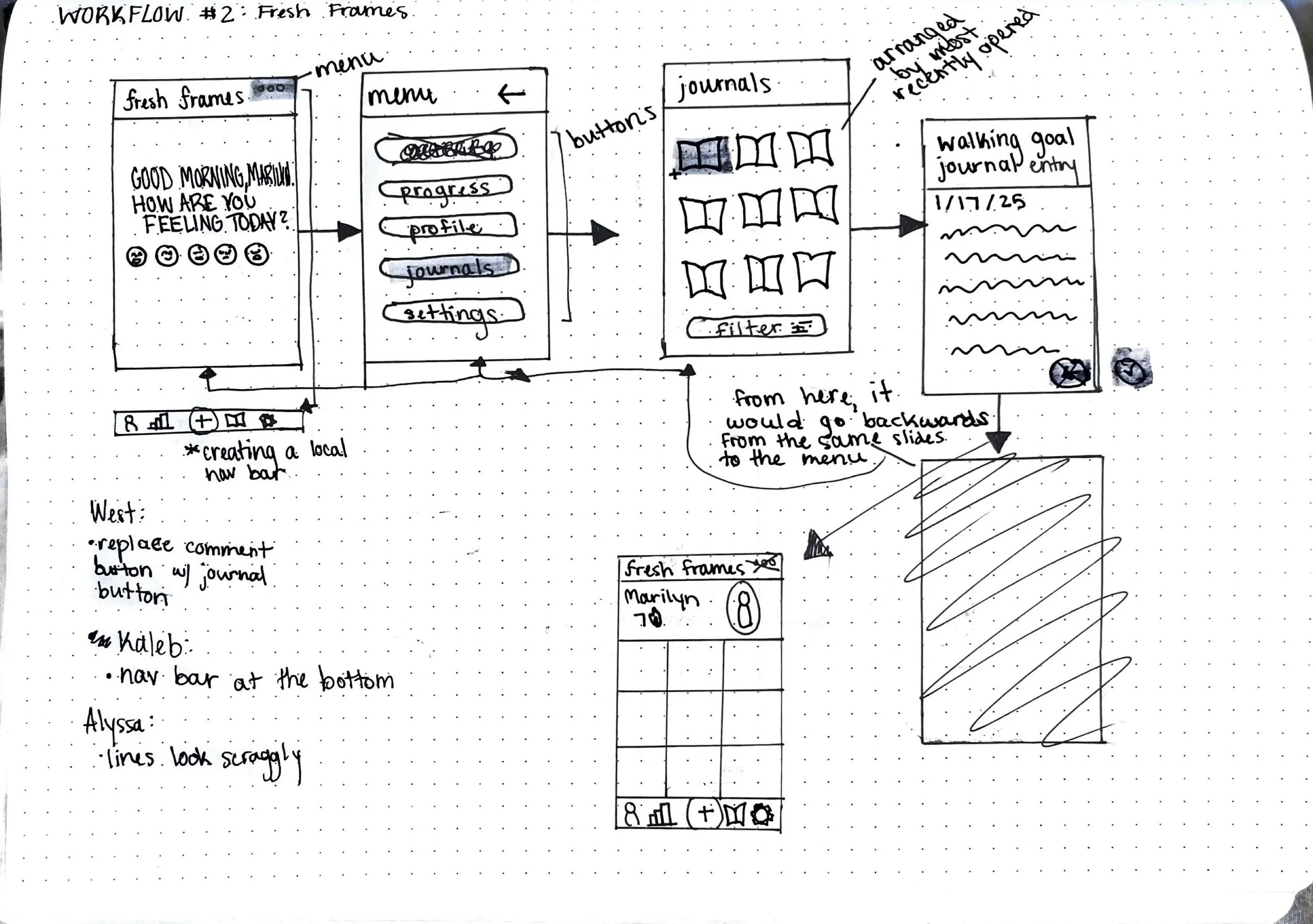
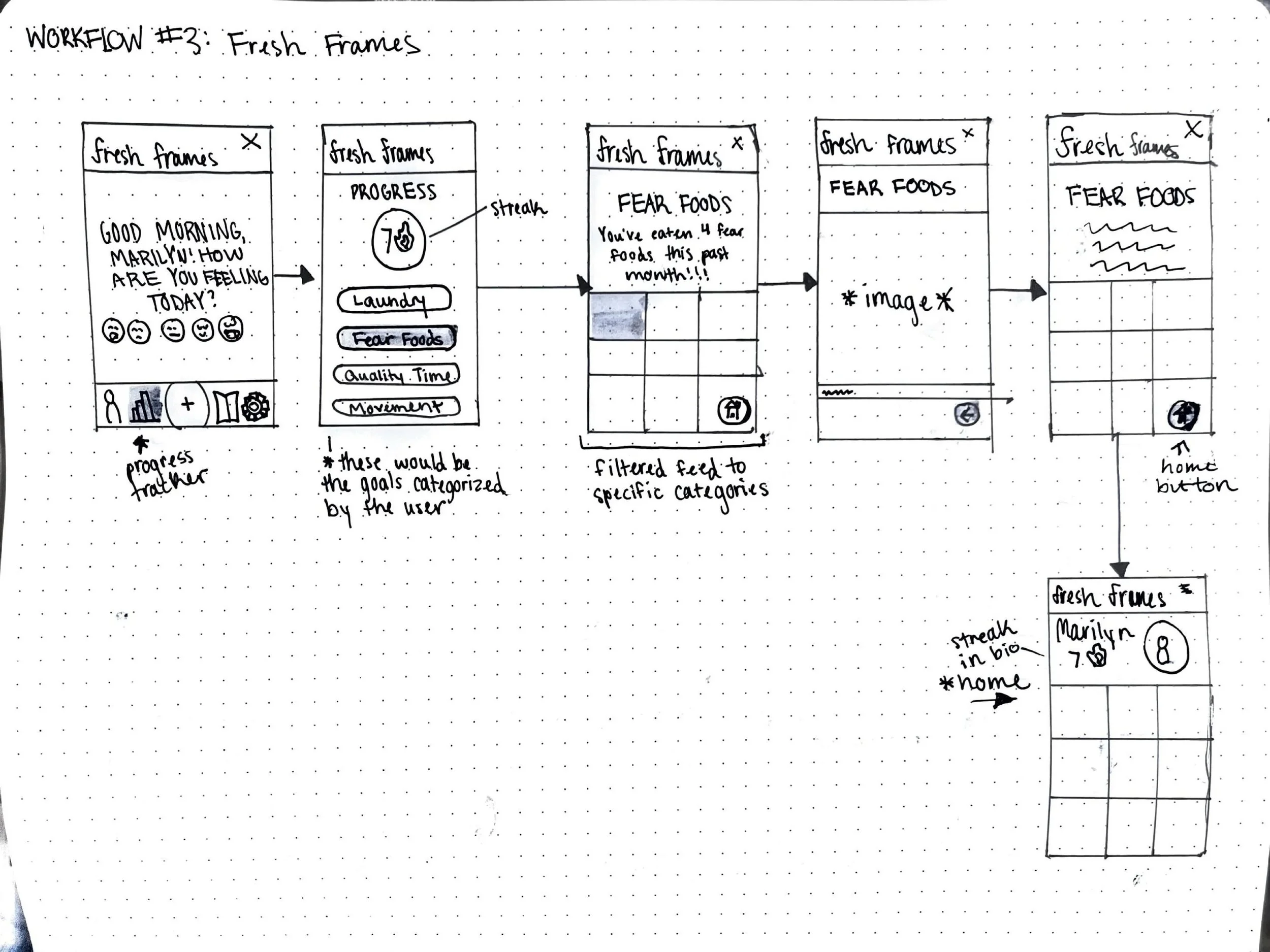
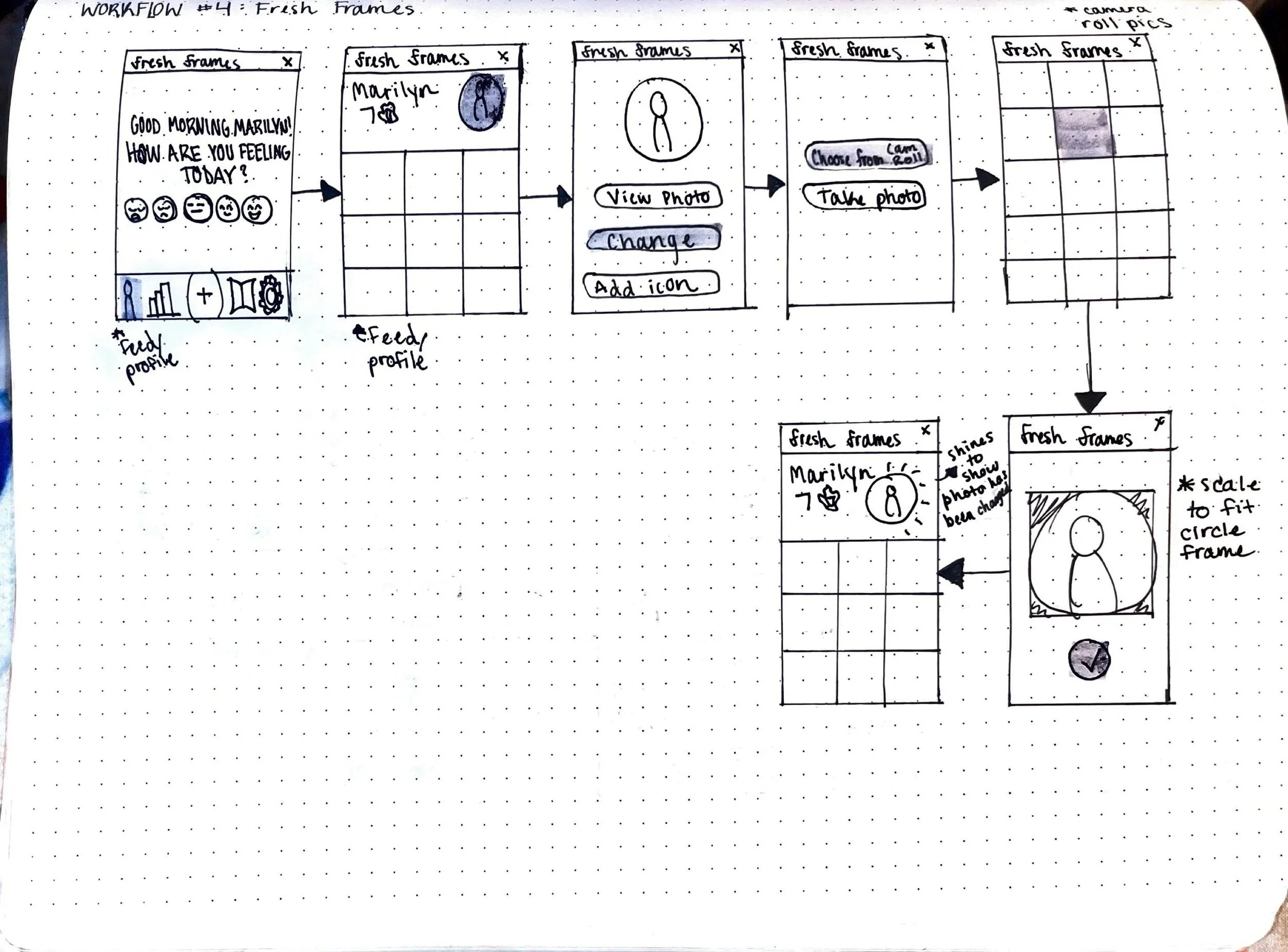
Low Fidelity Wireframes
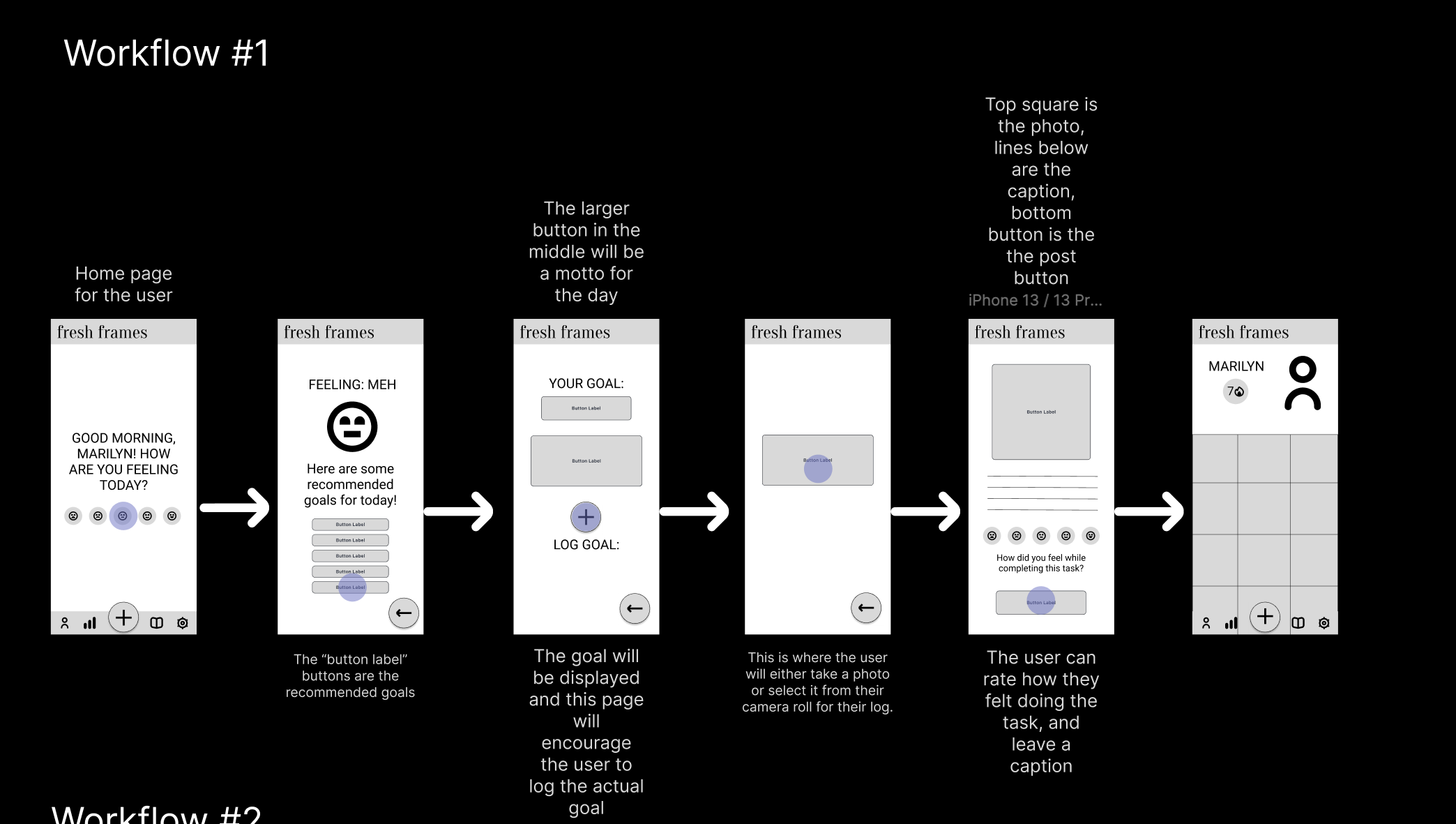
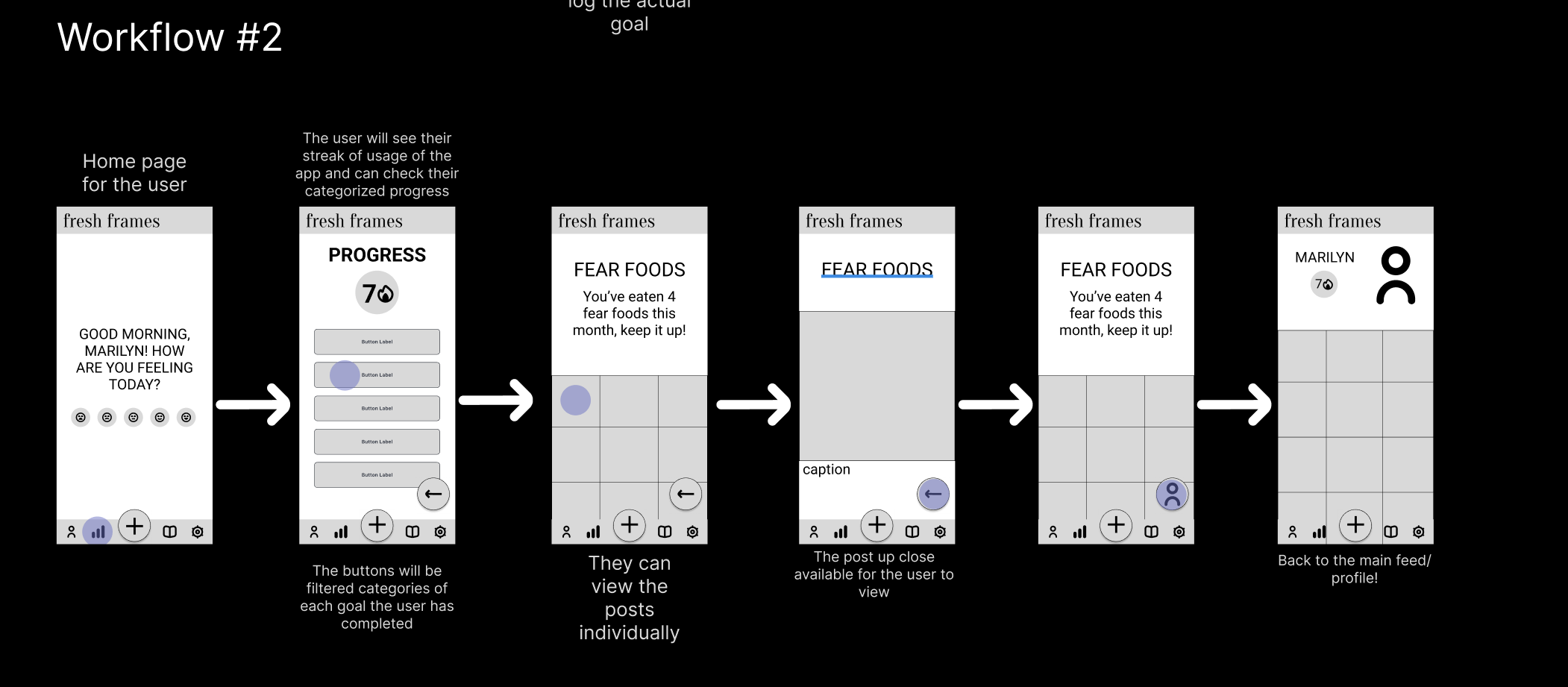
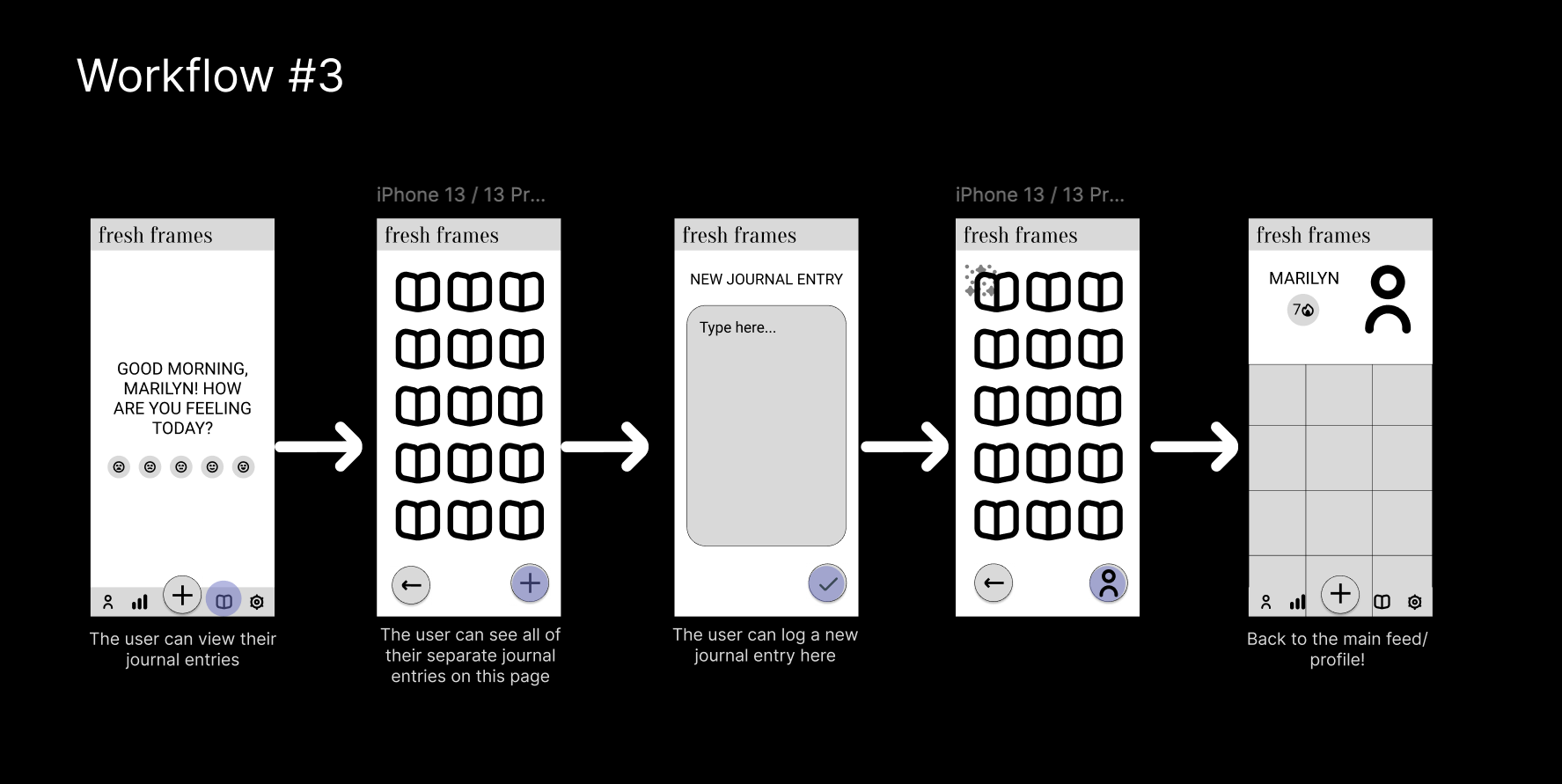
High Fidelity Usability Testing
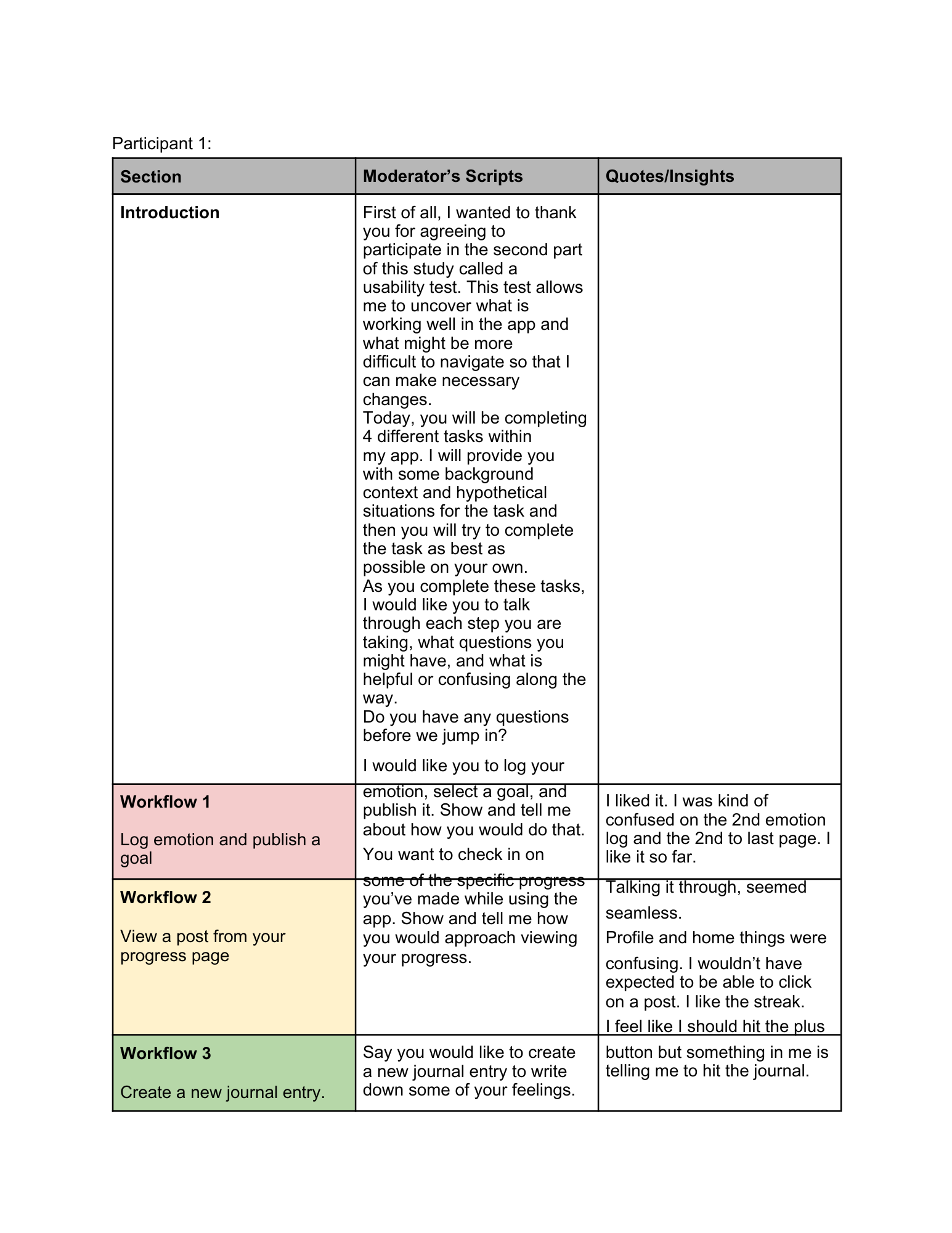
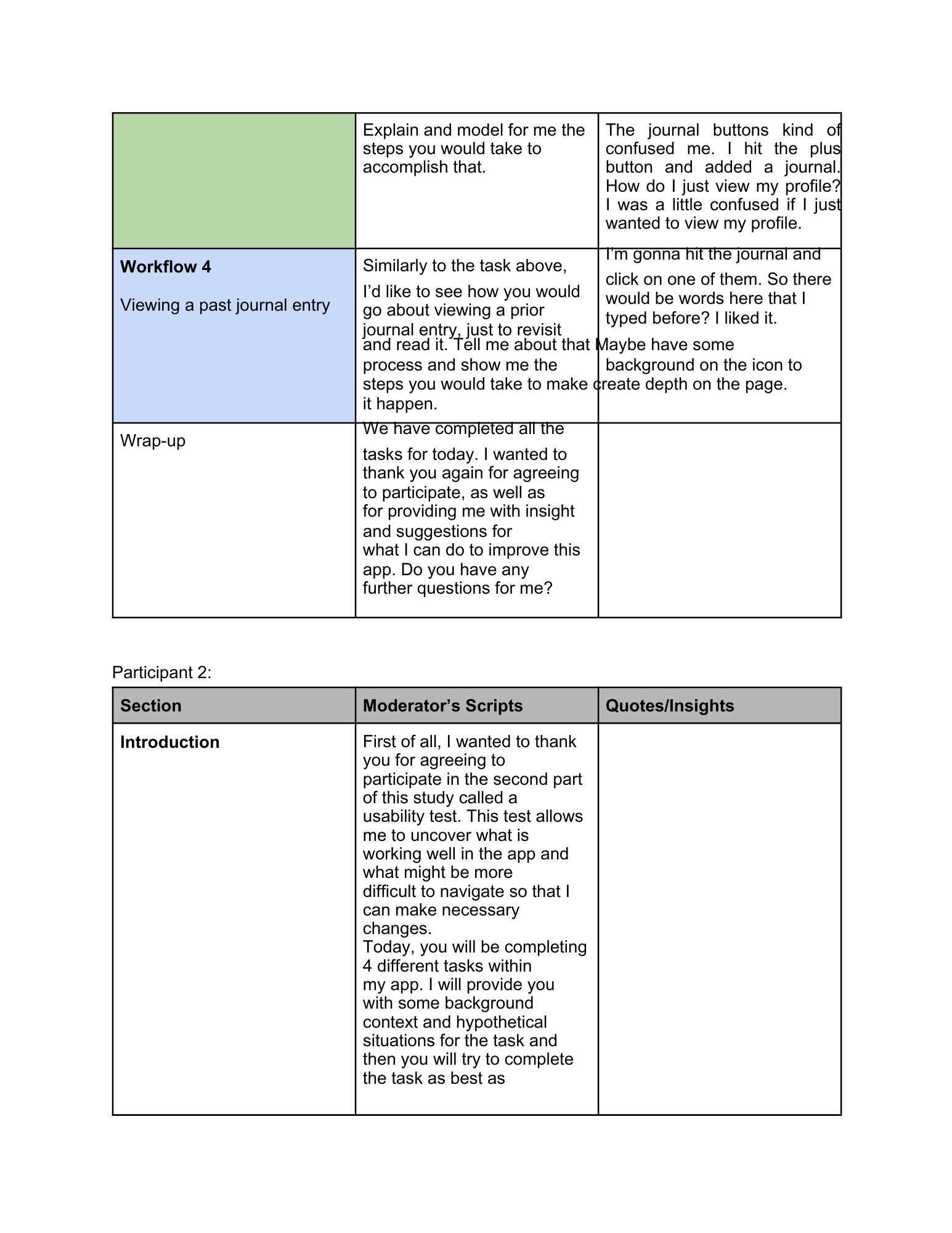
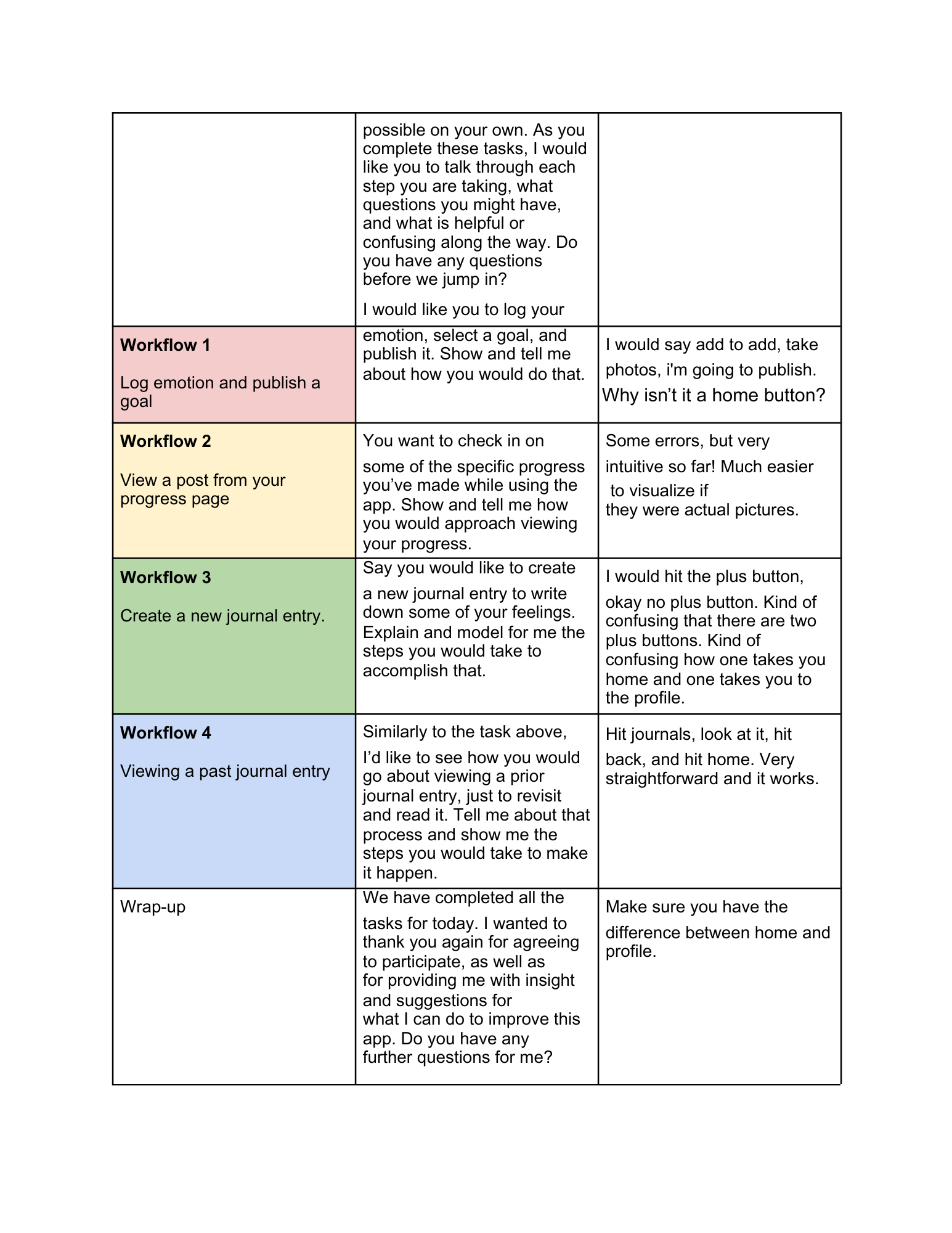
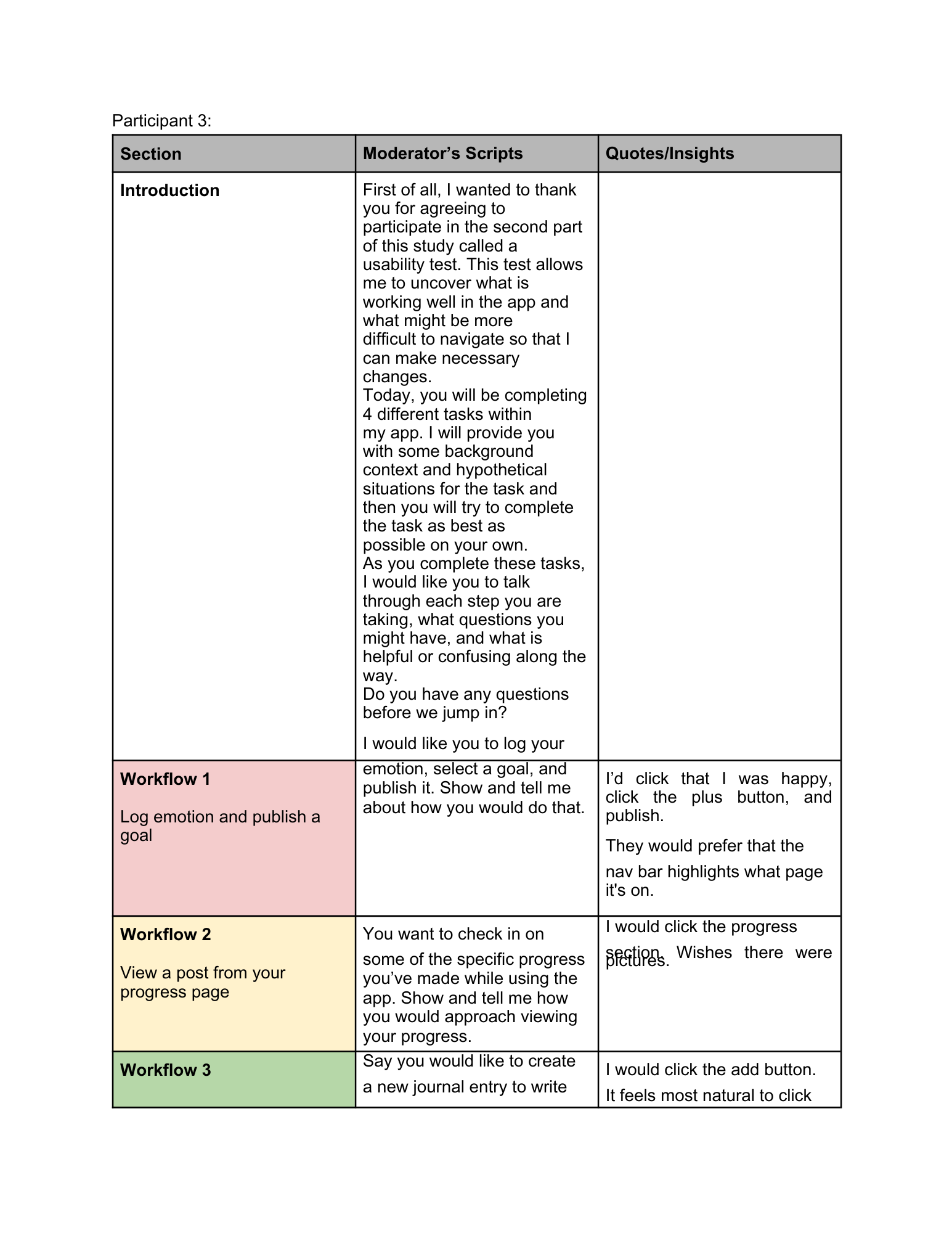
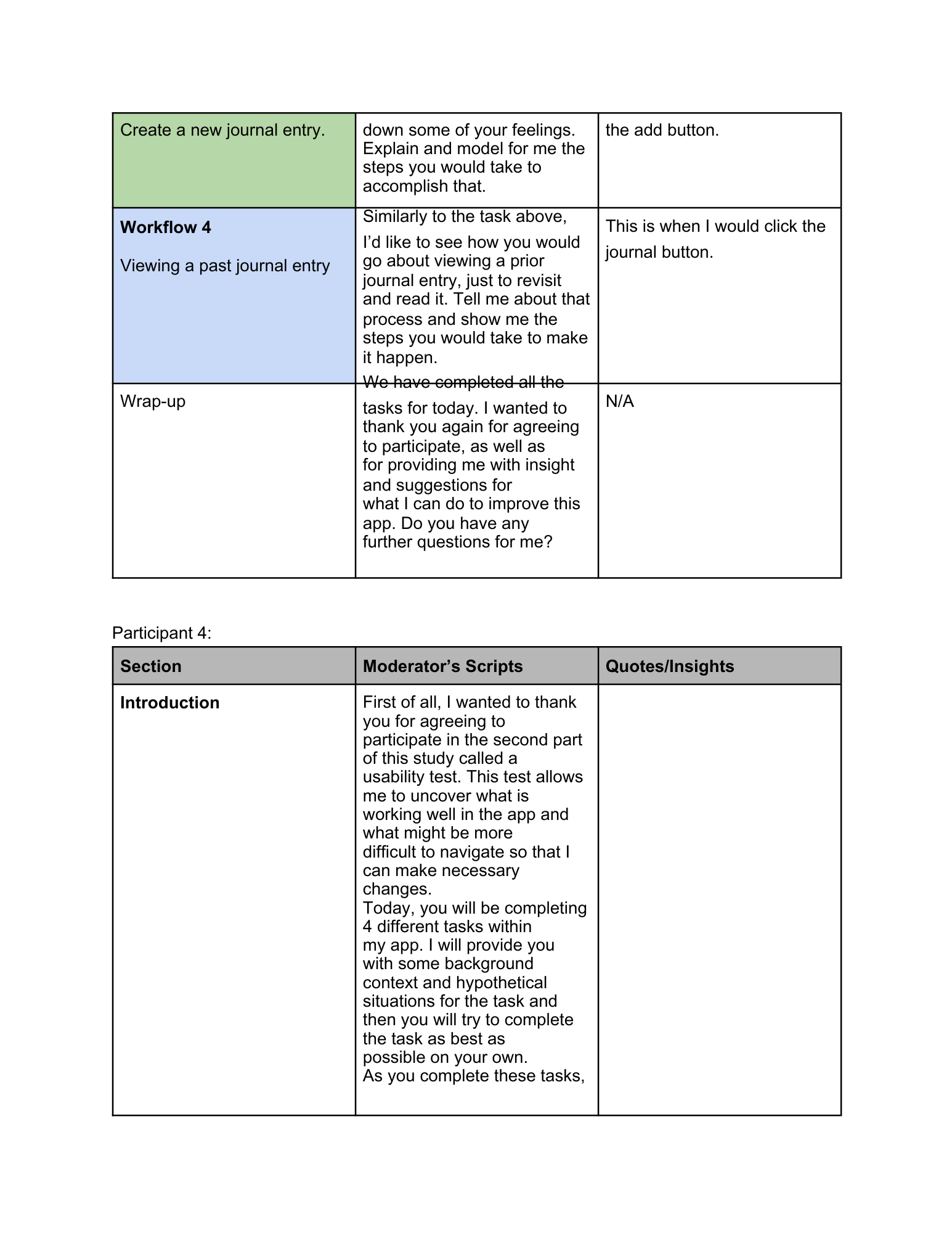
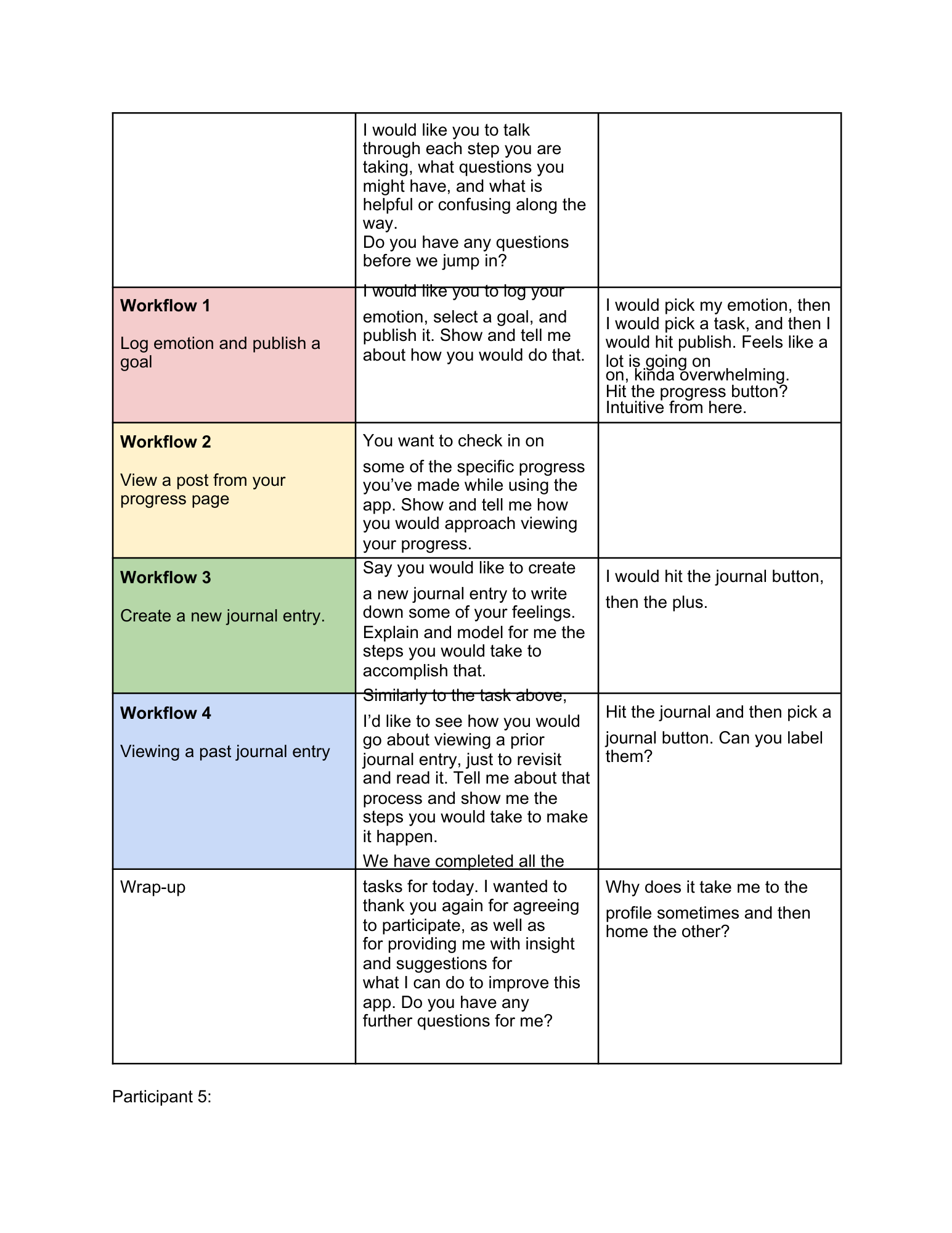
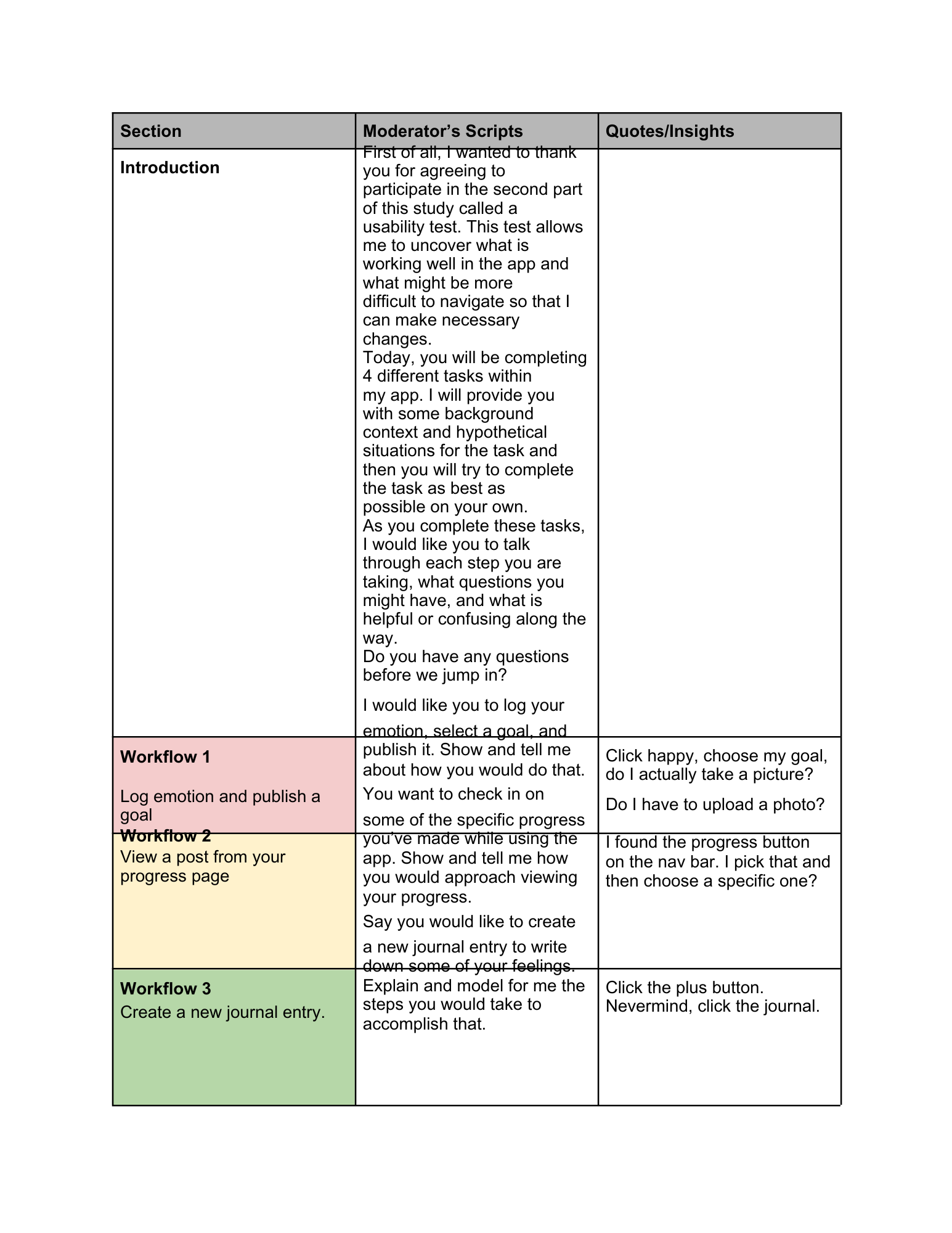
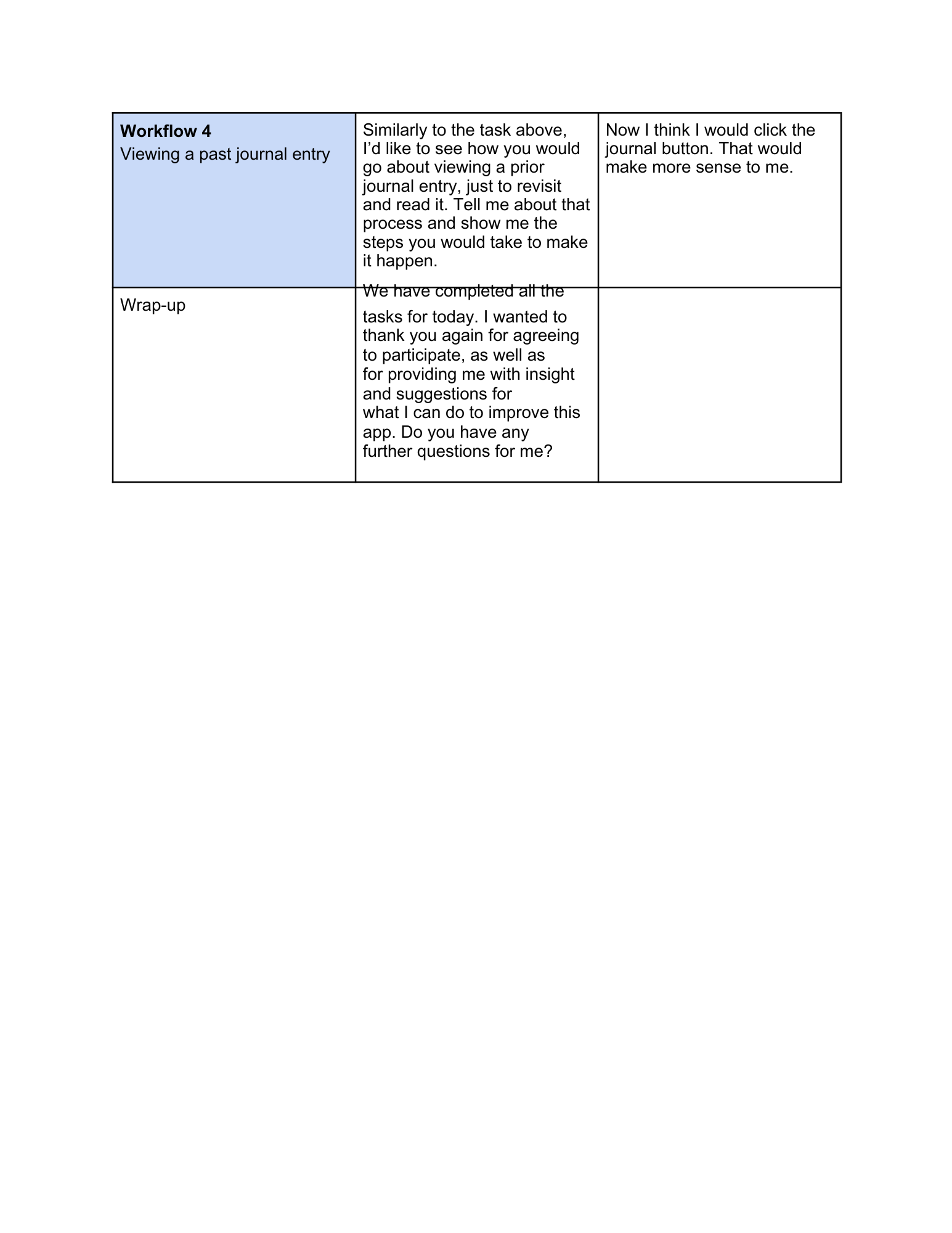
Throughout my design process, I was able to evaluate the user experience and interactive journey by guiding participants through a think-aloud usability test. This allowed me to observe how my original design translated in real time and identify where users experienced confusion or friction. From there, I analyzed the feedback and implemented changes based on recurring patterns and shared needs across participants.
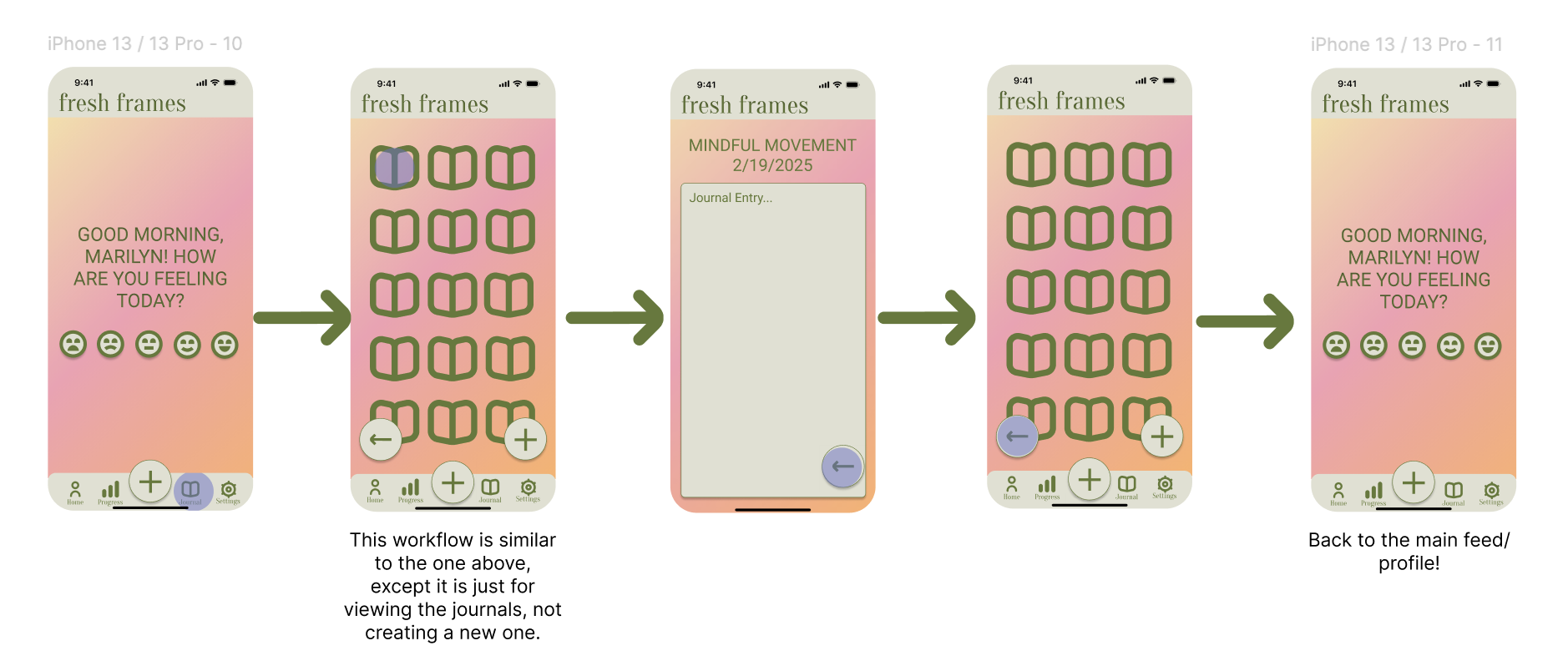
High Fidelity Wireframes
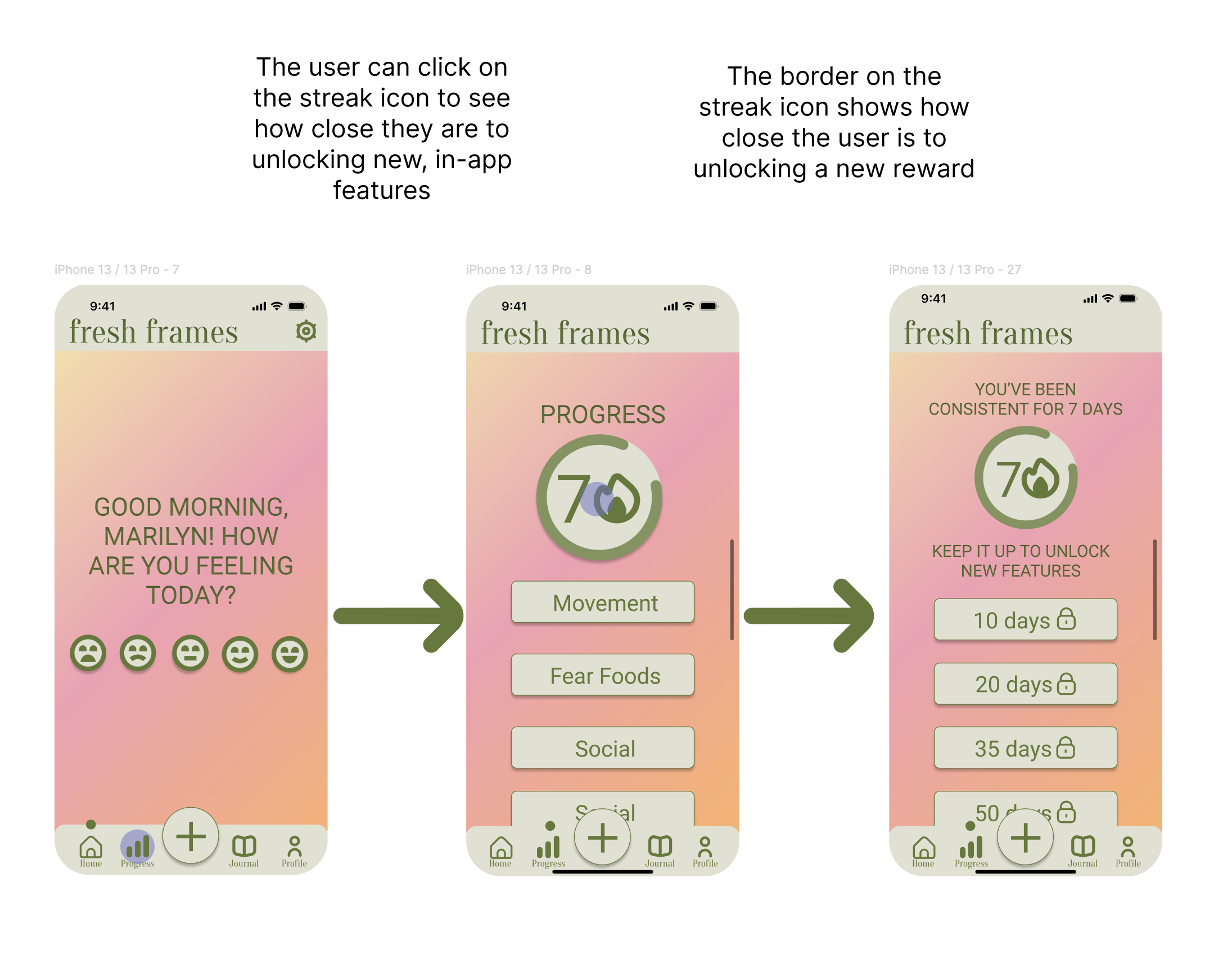
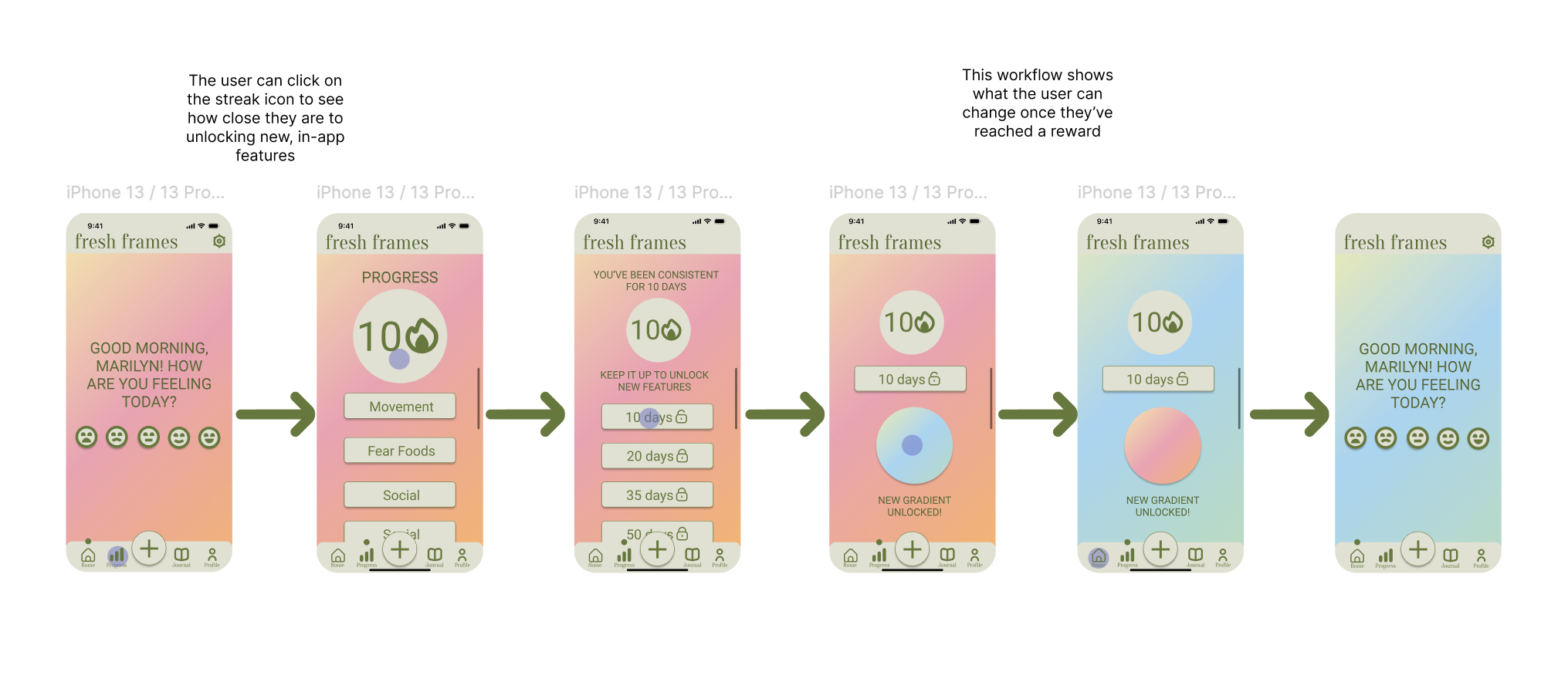
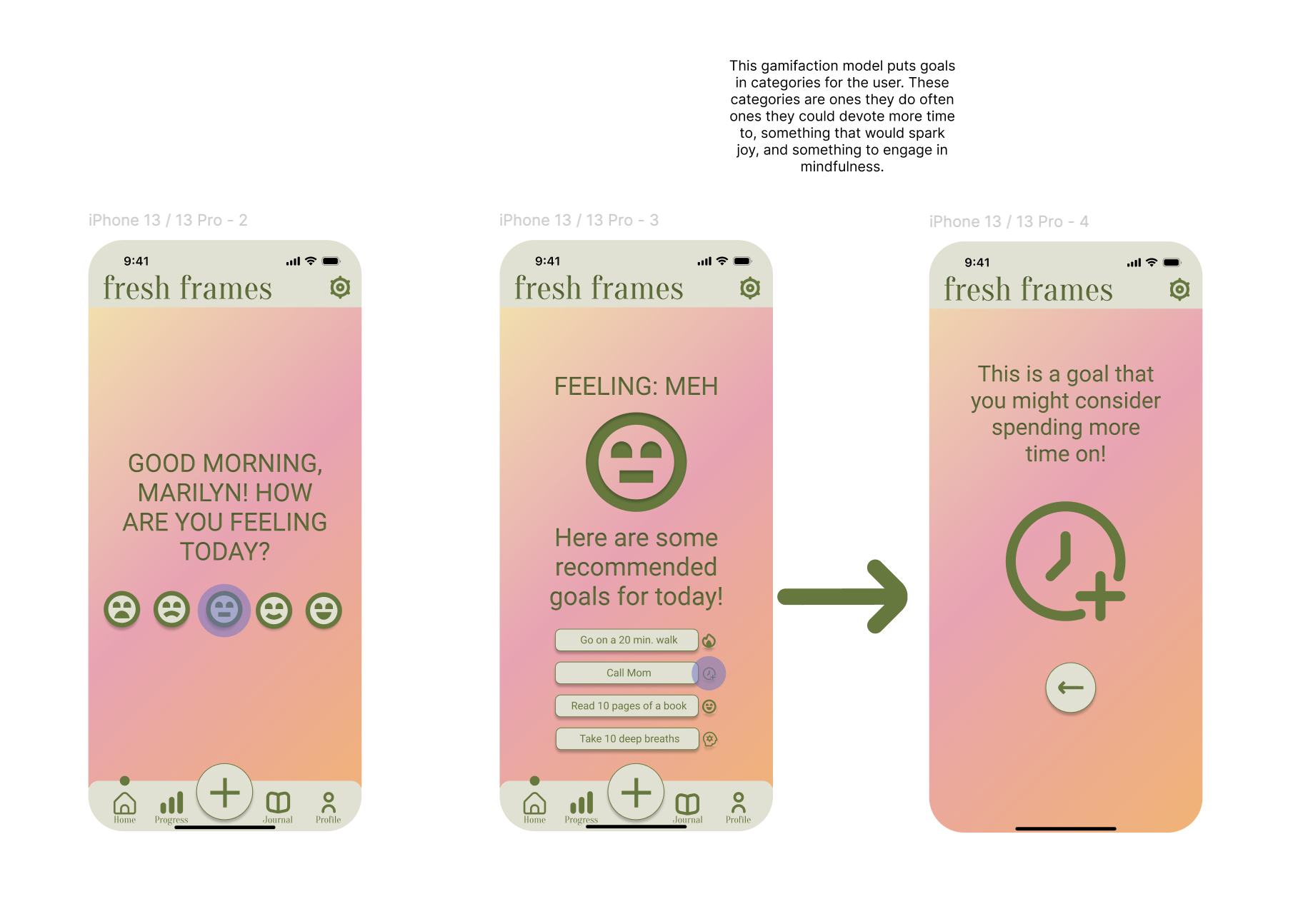
Gamification
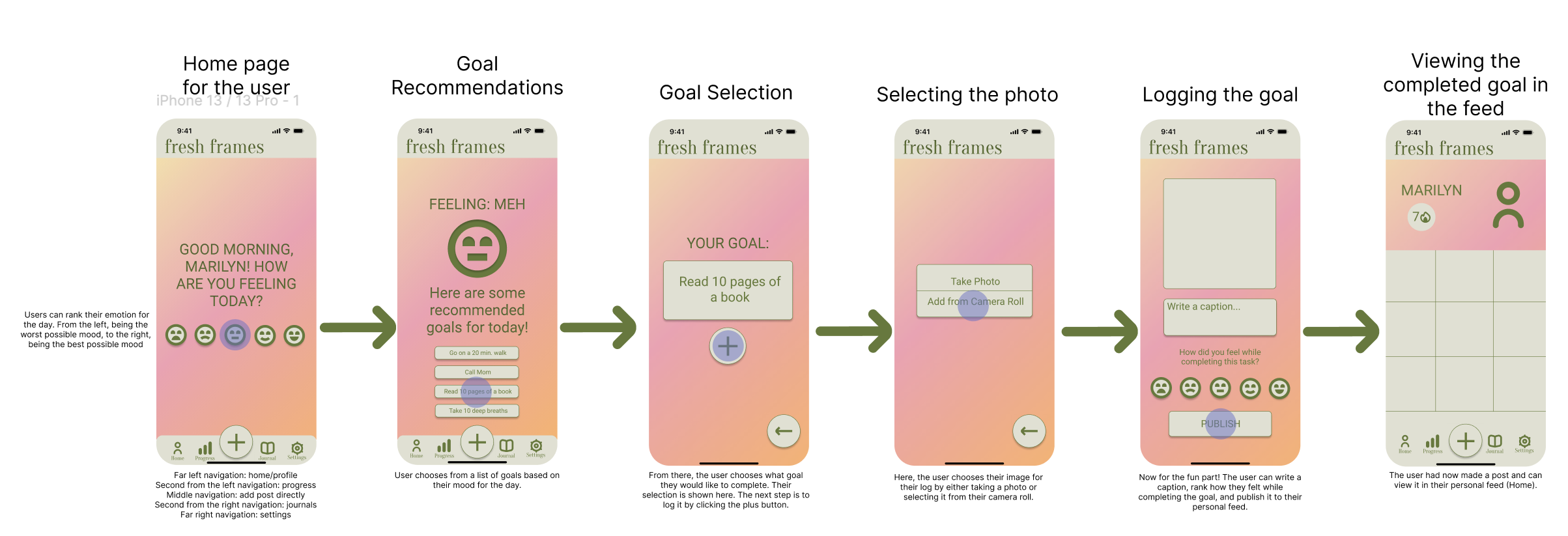
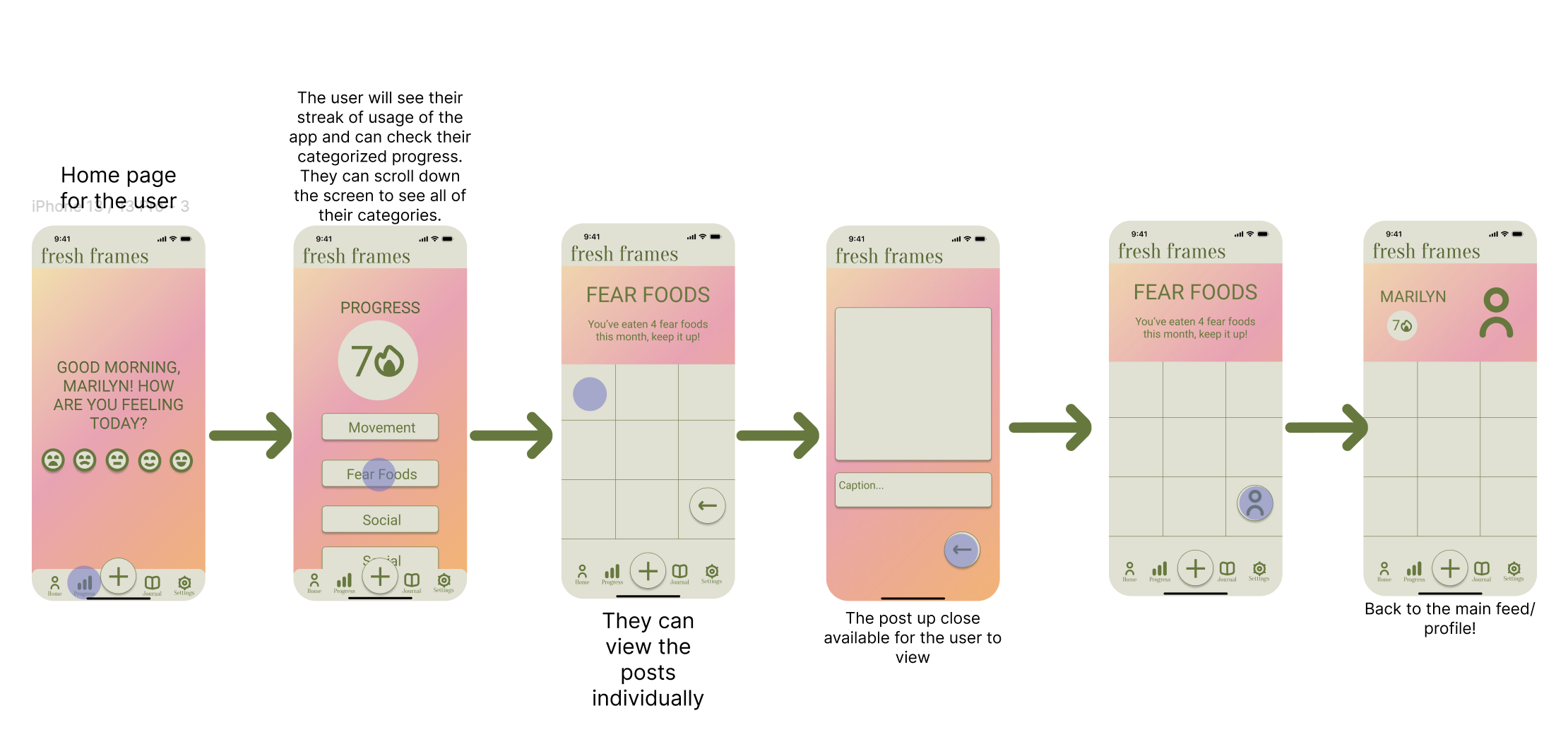
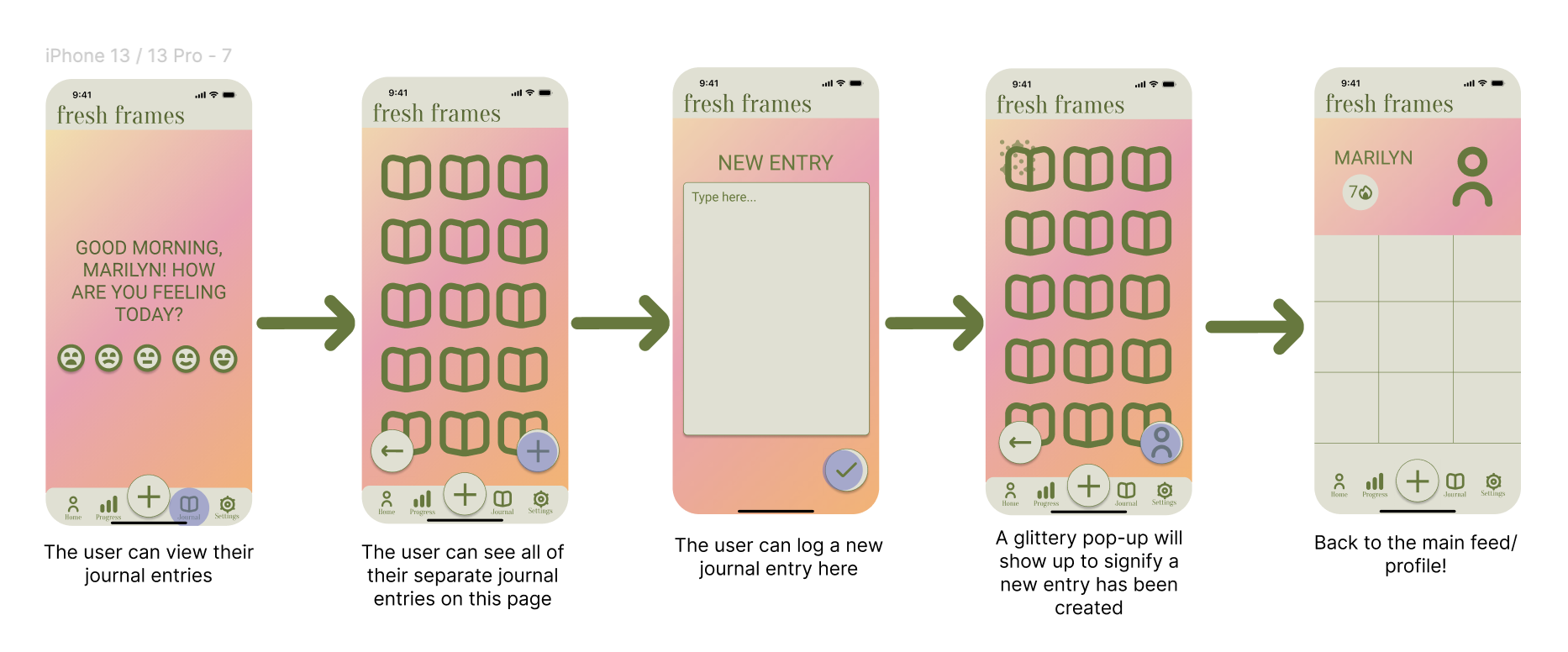
Visual Walkthrough
Throughout this project, I strengthened my skills in UX research and design by conducting interviews, synthesizing feedback, and iterating on my ideas to better align with user needs. I learned the importance of pivoting—making intentional changes to features and content based on patterns in user insights. Additionally, I expanded my proficiency in Figma, using it to translate concepts into cohesive, user-friendly designs. Overall, this project deepened my understanding of how thoughtful design can foster meaningful engagement and support personal growth.